
Product Launch
Introducing Argus Fleet: Fleet Management and Maintenance Platform
February 2026
Argus Fleet is a web-based platform for managing fleet maintenance operations, vehicle assets, and shop workflows across single or multiple facilities.
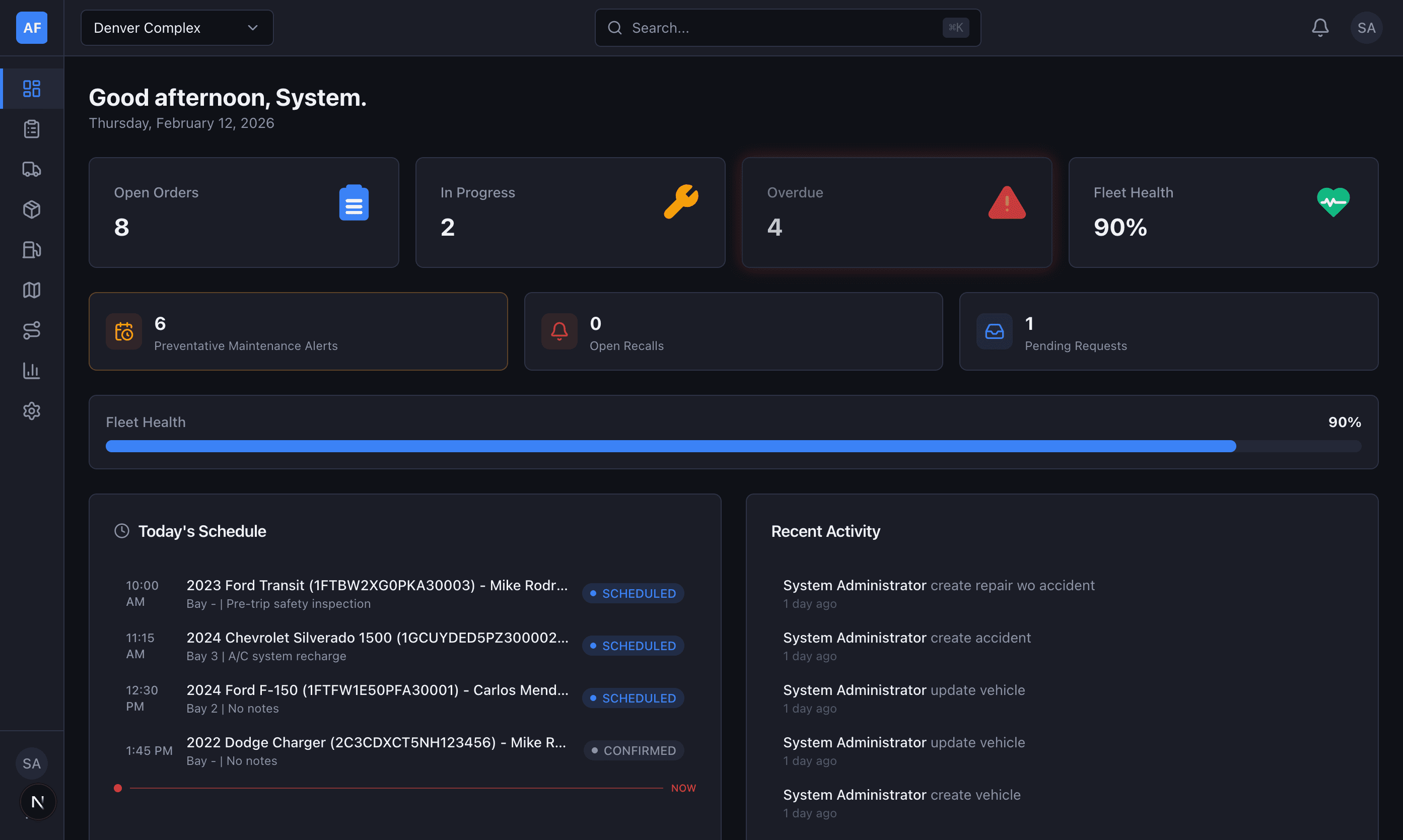
Organizations that operate vehicle fleets face a common set of operational challenges. Maintenance requests arrive through phone calls, emails, and hallway conversations. Work orders are tracked in spreadsheets or on whiteboards. Parts inventory is managed through manual counts. Preventative maintenance schedules slip because there is no automated tracking. When leadership asks for the total cost of maintaining a specific vehicle or the average turnaround time for a brake job, the answer requires hours of manual data gathering.
These problems are not unique to any single industry. Municipal fleets, utility companies, transit agencies, school districts, and private fleet operators all encounter the same disconnects between service requests, shop operations, parts procurement, and financial reporting. The tools that exist are often either too simple to handle real operational complexity or too cumbersome for technicians to use on the shop floor.
Work Order Lifecycle
Argus Fleet manages work orders from initial request through completion and cost rollup. Service requests can originate from fleet managers, vehicle operators, or automated triggers such as PM schedules and failed inspections. Each work order tracks the assigned vehicle, technician, priority level, requested and actual completion dates, parts consumed, labor hours, and outside service costs.
Work orders move through configurable status workflows. Technicians update progress from the shop floor, log labor time against specific repair operations, and requisition parts directly from the work order. When a work order is completed, the system rolls up all costs and updates the vehicle's service history automatically.
Scheduling and Capacity Planning
The platform provides scheduling tools that give shop supervisors visibility into workload distribution across technicians and service bays. A Gantt view shows work order timelines with drag-and-drop rescheduling. A heatmap view highlights capacity utilization by day and bay, making it straightforward to identify open slots and overbooked periods.
Scheduling accounts for technician skills, bay equipment requirements, and estimated job duration. When preventative maintenance comes due, the system can suggest available scheduling windows based on current shop capacity rather than simply adding to an already full queue.
Vehicle and Asset Tracking
Every vehicle and piece of equipment in the fleet has a complete record in the system. VIN decoding populates manufacturer data automatically. The platform tracks vehicle class, department assignment, lifecycle stage, odometer and engine hour readings, registration and insurance information, and the full history of work orders, inspections, and costs.
Fleet managers can view vehicle status across the entire fleet, filter by class, facility, or department, and identify vehicles that are out of service, overdue for maintenance, or approaching replacement thresholds. The system maintains a complete audit trail of all changes to vehicle records.
Parts and Procurement
Argus Fleet includes multi-location parts inventory management with bin tracking, reorder points, and inter-facility transfers. Technicians requisition parts directly from work orders, which decrements inventory and captures cost against the specific vehicle and repair operation.
Purchase orders are created when inventory reaches reorder points or when parts are needed for specific work orders. The PO workflow includes approval routing, vendor selection, receiving, and cost reconciliation. Parts usage history helps identify frequently needed items, optimize stocking levels, and negotiate volume pricing with vendors.
Preventative Maintenance
PM schedules are configured by vehicle class with triggers based on mileage intervals, calendar time, or engine hours. When a vehicle reaches a PM threshold, the system generates an alert and can automatically create a work order. PM compliance is tracked by vehicle, facility, and fleet-wide, with dashboards showing upcoming, due, and overdue maintenance.
Each PM schedule defines the inspection and service tasks to be performed, the parts typically consumed, and the estimated labor time. This information flows into the work order when the PM is triggered, giving technicians a clear task list and enabling accurate scheduling and cost forecasting.
Reporting and Benchmarking
Because all fleet operations flow through a single platform, reporting draws from a unified data set. Facility scorecards show work order volumes, completion rates, average turnaround times, and cost per vehicle. Total cost of ownership analysis combines maintenance, fuel, and depreciation data to calculate lifecycle costs by vehicle and class.
Cross-facility benchmarking helps organizations with multiple shops identify performance differences and share best practices. Reports can be filtered by facility, vehicle class, time period, and cost category. Export capabilities support integration with external financial systems and reporting requirements.
Learn more about Argus Fleet for your organization.